

The Buffalo Bayou Cistern Turns 100 — And Suddenly Everyone’s Obsessed
There’s a room underneath Houston that used to hold fifteen million gallons of drinking water, and for decades almost nobody remembered it was there. Now it’s the reason half of TikTok wants to book a flight to Texas.
The Buffalo Bayou Park Cistern hit its hundredth birthday this year, and instead of quietly fading into municipal history like most old infrastructure does, it’s having a moment. Videos of the space rack up hundreds of thousands of views. Instagram accounts built entirely around hidden places keep circling back to it. Visitors describe walking in and instinctively lowering their voices, the way you might in a cathedral, even though nobody told them to.
For a company that spends its days thinking about what keeps water in and out of concrete structures, watching a hundred-year-old cistern become a cultural moment is, frankly, a little thrilling. It’s also a good excuse to talk about why this particular tank lasted a century, why it eventually failed anyway, and what that means if you’re the one responsible for a cistern of your own.
A Reservoir Built to Be Forgotten
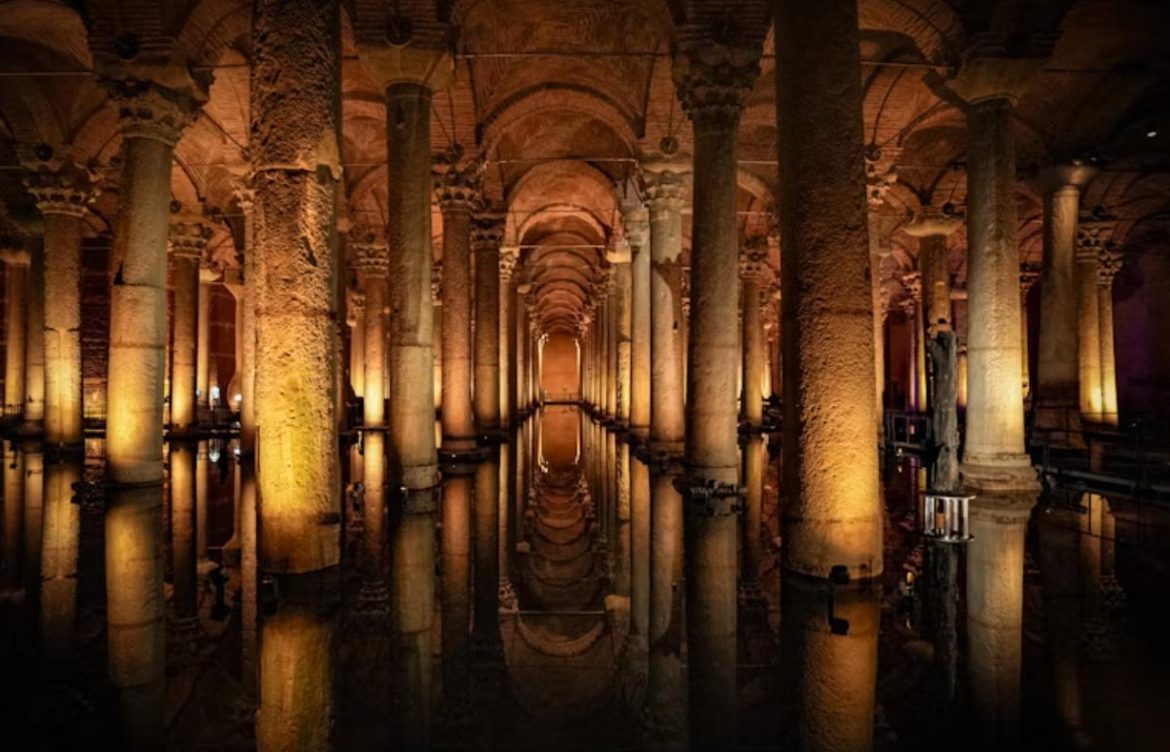
When the city of Houston built the reservoir in 1926, nobody expected it to become a landmark. It was meant to do exactly one unglamorous job: hold treated drinking water for a thirsty, fast-growing city and release it as needed. Engineers filled the underground chamber with row after row of slim concrete columns, 221 of them in total, each standing about 25 feet tall, supporting a roof buried beneath what would eventually become parkland. The finished space measured roughly 87,500 square feet, close to the footprint of a football field and a half, and it could hold around 15 million gallons at capacity.
It worked quietly for decades, doing the invisible labor that water infrastructure is supposed to do. Nobody photographs a reservoir that’s functioning correctly. Nobody films a tour through a tank with no leaks.
The Crack That Changed Everything
That changed in 2007, when engineers discovered a leak in the structure that couldn’t be reasonably patched. Water was escaping the reservoir faster than it should have, and rather than pour resources into repairing a nearly century-old structure with new water demands to plan around, the city decommissioned it. The reservoir went dry, then dark, then largely forgotten, another piece of aging municipal infrastructure waiting for a wrecking ball that, as it turned out, never came.
That’s the part of this story that resonates most with us. A single unresolved leak was enough to end the working life of a structure that had otherwise held up for eighty-plus years. It’s a reminder of something we see constantly in our own work: a cistern doesn’t usually fail all at once. It fails at one seam, one crack, one spot where the lining gave out before the concrete did. The rest of the structure can be perfectly sound, and it won’t matter, because water only needs one way out.

From Abandoned Tank to Viral Landmark
Here’s the twist nobody saw coming. Rather than staying sealed off forever, the empty reservoir was eventually rediscovered by the Buffalo Bayou Partnership, the nonprofit that manages the park above it, and opened to the public as a strange, beautiful architectural relic. Guided tours started. Then came the art.
The most talked-about addition is Undercurrents, an immersive light and sound installation by artist Rafael Lozano-Hemmer, built specifically to activate the cavernous space using reflection, illumination, and the kind of natural acoustics you can’t fake. Visitors say a single whispered word can seem to hang in the air for seconds. Phone flashlights bounce off two inches of standing water on the floor, doubling every column into an infinite, symmetrical hallway. It’s the sort of visual that was practically built for a phone camera, decades before anyone owned one.
Social platforms did the rest. Clips of the columns, the reflections, and the eerie echo have quietly become one of those pieces of content that resurfaces every few months, picked up by a new account and introduced to a new audience each time, exactly the kind of slow-burn virality that turns a regional attraction into a bucket-list destination.
What a Hundred-Year-Old Tank Can Teach Every Cistern Owner
It’s tempting to file this story under quirky travel content and move on. But underneath the aesthetic, there’s a genuinely useful lesson for anyone who owns, manages, or maintains a cistern, whether it’s a rural property’s rainwater tank or a commercial water storage system.
The Buffalo Bayou reservoir survived as long as it did because of solid design and materials that were appropriate for their era. It stopped working the moment its lining could no longer keep water where it belonged. Modern liner and coating systems exist precisely to solve that problem before it starts, extending the working life of a structure well past what raw concrete can manage on its own. A properly applied polyurea or elastomeric coating doesn’t just patch today’s crack; it creates a continuous, flexible barrier that moves with the structure instead of fighting it, which is usually where older linings begin to fail.

None of that makes for quite as good a video as glowing columns reflected in still water. But it’s the reason a cistern gets to have a hundredth birthday worth celebrating instead of a decommissioning notice at year thirty.
The Next Hundred Years
Houston’s cistern got a second life because people looked at a flooded, abandoned tank and saw something worth preserving instead of something to fill in with concrete and forget. Most cisterns don’t get that kind of romantic second act. They just need to keep doing their job, quietly, for as long as possible.
If there’s a takeaway buried under all those viral videos, it’s this: the structures that last long enough to become legendary are the ones that got the unglamorous maintenance right the first time. Whether that’s a landmark reservoir under a Texas park or the tank sitting under your own property, the water doesn’t care how good the architecture looks. It just looks for the one place it can get through.
If you’re noticing staining, a musty smell, or a slow drop in water level in your own cistern, don’t wait around for a decommissioning notice of your own. Explore our cistern coating services to see how a modern liner system can add decades to a structure’s working life.