Changing a Cistern to Drinking-Water Use: Review More Than the Lining
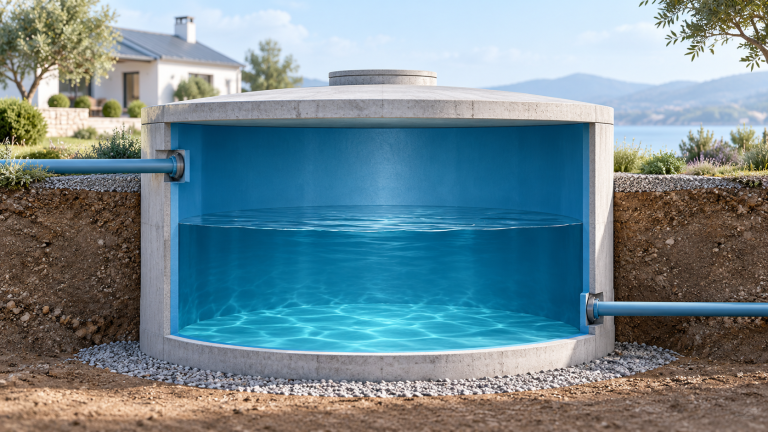
Before converting a nonpotable cistern, review its history, source, connected plumbing, lining approval and commissioning responsibilities.
Read
FAQ
Straight answers for owners deciding how to fix a tank and for contractors deciding whether to start lining them.
FAQ
For most concrete cisterns, a spray-applied polyurea or polyurea hybrid membrane over properly prepared and repaired concrete gives the best mix of flexibility, crack bridging and fast return to service. If the water is for drinking, the system has to be certified to NSF/ANSI/CAN 61 for that use.
Some polyurea systems are certified to NSF/ANSI/CAN 61 for contact with drinking water and some are not. Certification is specific to the product and to conditions like tank size, cure time and temperature, so always check the actual listing for the system being sprayed in your tank.
Yes, but the leaks have to be dealt with first. Active water is stopped, cracks are routed and filled, and damaged concrete is rebuilt. Then the liner goes on over a sound, dry, prepared surface. A coating is not a substitute for repairing a structure that is moving water.
The tank has to be drained, cleaned, dried, prepped, repaired and lined, then cured and flushed before refill. Polyurea’s fast cure shortens the coating part of that window considerably compared with slower-curing systems. Your applicator can give you a schedule once they have inspected the tank.
Service life depends mostly on surface preparation, film thickness and water chemistry. A properly applied polyurea liner is built for long-term immersion service. Ask for the system’s data sheet and the applicator’s warranty in writing.
It helps but it is not required. ArmorThane trains new applicators on equipment operation, surface prep and application. Contractors who already work in concrete, waterproofing or tanks usually ramp up fastest.
A heated, high-pressure plural-component proportioner, heated hose and spray gun, transfer pumps, clean dry air, and power (a generator on mobile rigs). You also need surface prep equipment such as grinders or blasting gear, confined-space gear, and proper respiratory protection.
Plenty. The same equipment sprays truck bedliners, secondary containment, roof coatings, manholes and pipe, industrial floors and more. Many applicators start with one market and add others as the rig gets busy.
Yes. Equipment financing options are available, and your coatings specialist can walk you through them along with the startup packages.
A coatings specialist from ArmorThane, the polyurea manufacturer behind this site, based in Springfield, Missouri. You will hear from a person, not an autoresponder sequence.
The Journal
Before converting a nonpotable cistern, review its history, source, connected plumbing, lining approval and commissioning responsibilities.
Read
A relined cistern still needs an operating plan. Review low demand, water age, system layout and professional monitoring without assuming the lining…
Read
After a cistern overflow, separate the operating cause, outlet and vent protection, and confirmed lining damage before agreeing the repair scope.
Read
Get started
Tell us a little about you. A coatings specialist will follow up with equipment options, training dates and pricing, or connect you with a trained applicator if you need a tank lined.
Backed by ArmorThane. Polyurea and polyurethane coatings manufacturer since 1989, Springfield, Missouri.