Low-Demand Cisterns: Review Water Age Alongside the Lining
A relined cistern still needs an operating plan. Review low demand, water age, system layout and professional monitoring without assuming the lining treats the water.
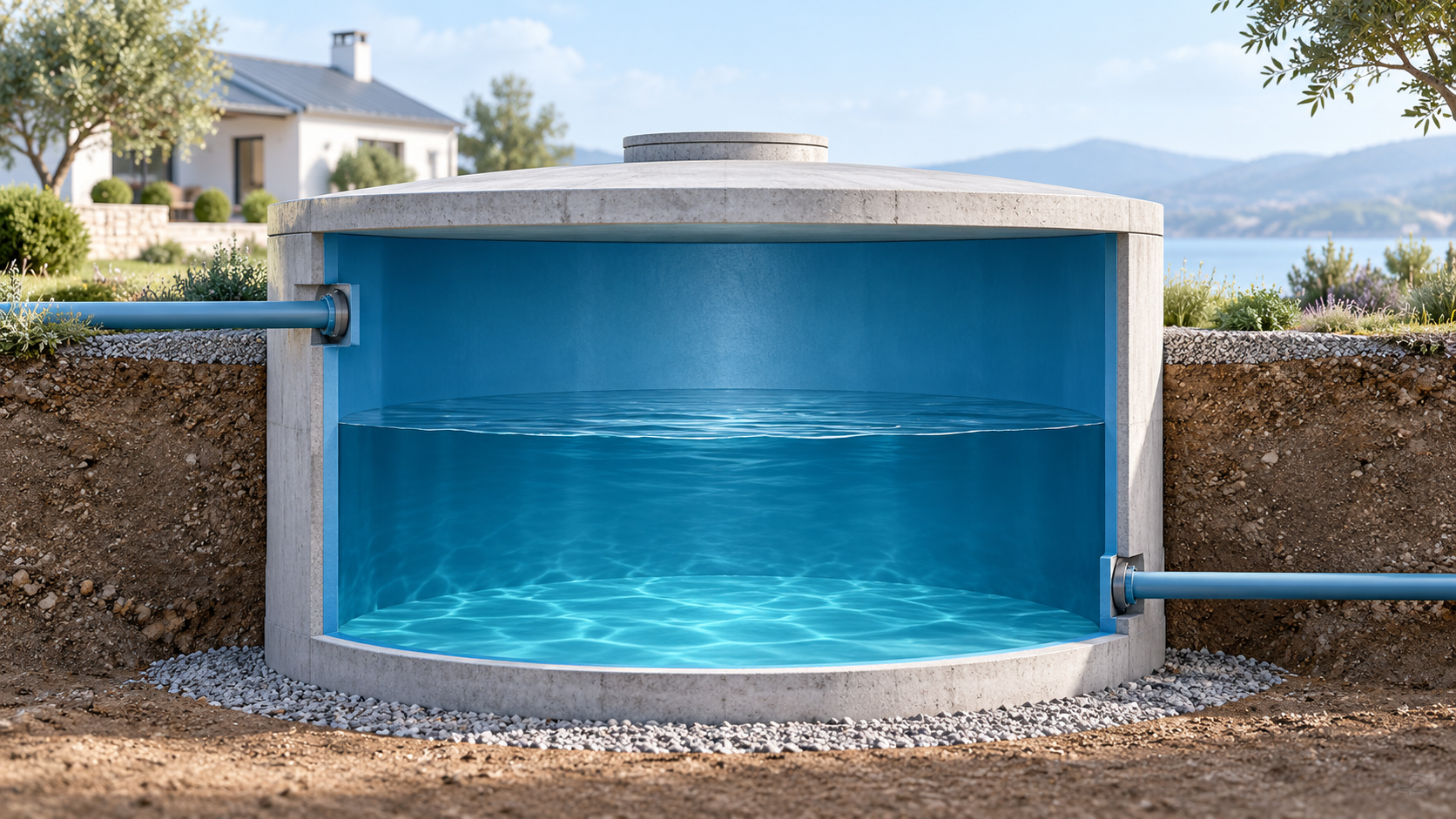
A newly lined cistern may hold water successfully while a different question remains unresolved: how long does that water stay in storage before it is used? A lining project repairs or protects the storage surface. It does not, by itself, establish that the tank’s operating pattern suits today’s demand.
Water age belongs in the conversation when a property becomes seasonally occupied, an operation reduces production, or a large reserve tank serves a smaller daily demand than originally expected. This is an owner-planning guide, not a water-treatment design or a set of operating limits. Have the water-system professional determine the appropriate assessment and controls.
Understand what water age describes
Water age is the time water spends in a distribution system before use. EPA’s water-age management fact sheet identifies low usage, oversized storage and poor circulation as circumstances that can increase it. The guidance is written for public water systems; private-cistern decisions still need advice suited to their source, treatment, intended use and local requirements.
A full tank is therefore not automatically an operating success. Nor is a recently added load proof that all older water has been displaced. The owner needs an assessment of the actual system, not a calendar rule borrowed from a different tank.
Describe how demand has changed
Start with information that is already available. Gather water-delivery dates, meter records, occupancy patterns and operating logs. Mark long periods with little or no use. Identify seasonal irrigation, livestock, cleaning or process demand separately from drinking-water use, because those activities may vary on different schedules.
Record the change that prompted the review. A guesthouse may be occupied only on weekends; a workshop may have removed a water-using process; a property may now rely partly on another supply. Tell the reviewer when the change occurred and whether controls or refill practices changed with it.
Do not turn an estimate of daily consumption into a claim about every part of the tank. The useful first deliverable is a dated demand history with its uncertainties clearly marked. It gives the professional something more informative than “we do not use much water.”
Bring the tank and piping arrangement into view
Provide available drawings showing the cistern, inlet, outlet, connected storage, treatment equipment and major supply branches. Include normal operating levels and controller settings where documented. Note which details have been verified and which come from old plans.
Ask the reviewer whether the configuration could leave poorly exchanged areas and whether additional information or monitoring is necessary. EPA notes that poor circulation and thermal stratification can increase water age in portions of a storage tank. That is a reason to assess the real arrangement, not permission to install a mixer or modify connections without design review.
If a drawing is missing, have qualified personnel determine how the information can be obtained safely. Owners should not enter the tank, climb onto it or reach through an access opening to investigate. A water-age review does not change the need for appropriate access and safety controls.
Keep water-quality questions separate from lining condition
EPA’s storage-facility resources identify physical openings, sediment and biofilm among water-quality concerns. An intact lining is only one part of the storage system. Keep the review of tank surfaces, sanitary barriers and operating conditions distinguishable so a sound-looking coating does not end the inquiry.
Tell the water-system professional about any reported taste, odor or water-test concern without assigning a cause. Ask what the observations justify checking, and who will interpret the results. A photograph cannot determine whether stored water is safe, and a new coating should not be presented as treatment for an unexplained water-quality problem.
For catchment supplies, remember that the incoming water also matters. The CDC’s rainwater guidance explains that collected water can carry germs and chemicals and recommends health-department advice on testing and treatment. Adding treated water to untreated rainwater does not make the combined supply automatically safe.
Ask for an operating review, not a universal refill interval
A useful professional response identifies what evidence is sufficient, what remains unknown and whether an operating or design change is appropriate. Possible questions include how water levels are managed, what monitoring is needed, and how periods of low demand should be handled. The responsible parties must select the actual response.
Do not independently lower reserve levels, bypass treatment, change disinfectant dosing or add routine flushing. A cistern may have structural water-level restrictions or supply fire protection and other essential needs. Those constraints must remain part of the review. Our buried-cistern outage guide explains why an empty condition cannot be assumed acceptable.
Keep the decision with the rehabilitation record
File the demand history, system sketch, professional findings and agreed operating instructions beside the lining documentation. Identify who is responsible for monitoring and what changes trigger another review, such as extended vacancy or a new water source.
If assessment requires sampling, coordinate it with the responsible laboratory and operator; the laboratory-planning guide covers those logistics. The outcome should be a clear operating basis for the water system, not a blanket promise that relining has solved every storage concern.
Do this work for a living
Want to spray cistern liners?
ArmorThane equips and trains contractors to line cisterns, tanks and pipe with polyurea. Get the startup details in two minutes.