Planning a Cistern Relining Outage: Keep the Water Supply Working
Plan a cistern relining outage around temporary water, the full work sequence, release criteria, and a contingency that keeps the property supplied.
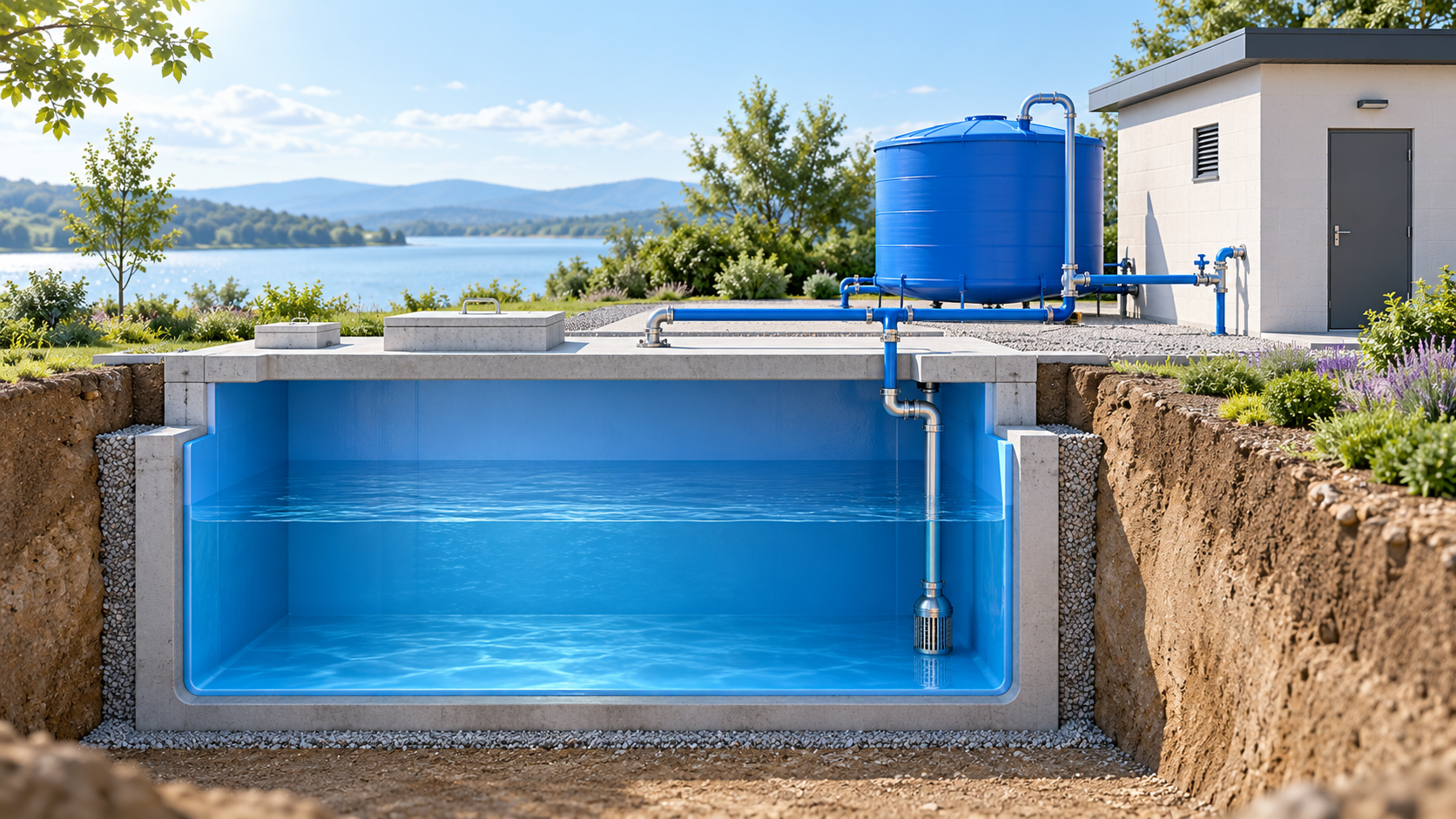
Owners often ask how long the liner takes to spray. For a working cistern, the more useful question is how long the property must operate without that tank. Draining, cleaning, inspection, repairs, application, cure, and recommissioning all compete for the same outage window.
Good planning starts before the water level drops. This guide focuses on keeping the property supplied while a contractor rehabilitates the tank. It is a planning framework; the installer, water-system operator, and relevant local authority should establish the actual work and release requirements.
List what the cistern supplies
Write down every use connected to the tank. Drinking and cooking water are obvious, but toilets, livestock, irrigation, cooling equipment, and washing processes may depend on it too. Check whether the tank also supports fire protection. A fire-water impairment needs its own coordinated plan with the responsible fire-protection professionals and authority.
Separate essential demand from demand that can pause. A household may postpone irrigation and laundry. A business may be able to move a washdown operation to another day. Make those choices deliberately rather than finding out which tap has stopped working after the tank is isolated.
Build the temporary-water plan around actual demand
Use meter records, operating logs, or a measured trial to estimate daily demand during the outage. Record peak demand as well as total volume. A temporary tank might hold enough water for the day while its pump or delivery arrangement cannot meet a short period of heavy use.
The CDC’s emergency-water guidance provides a useful household preparedness baseline, including at least one gallon per person per day. That emergency allowance is not a design figure for a home’s normal plumbing demand or a commercial operation. Keep drinking-water reserves separate from the estimate for toilets, cleaning, animals, and equipment.
Have a qualified provider determine the suitability of temporary storage, pumps, hoses, connections, and backflow protection. Confirm the water source, delivery access, replenishment schedule, and responsibility for checking water quality. A container that holds water is not automatically suitable for potable-water service.
Schedule the whole sequence
Ask for a written programme that identifies the work stages and the conditions required to move forward. The most useful schedule includes decision points: the inspection after cleaning, acceptance of repairs, approval of prepared surfaces, lining inspection, and release for refill. It also identifies who can make those decisions.
Our broader water tank rehabilitation guide explains the physical sequence. For outage planning, translate each stage into an operational consequence. If additional concrete repairs are discovered after draining, who approves the work? How long can the temporary supply stay in place? Who can authorize an additional water delivery?
A fast-gelling coating may shorten one stage without shortening every stage around it. Obtain product-specific cure and return-to-immersion instructions before booking the refill. Include the requirements for primers, repairs, and any topcoat in that discussion.
Sort access and waste arrangements before mobilization
Walk the route for the spray rig, cleaning equipment, temporary storage, and water deliveries. Consider gate widths, overhead restrictions, ground conditions, electrical supply, and the space needed to keep the work area protected. A clear route on a drawing can become a blocked route when several contractors arrive together.
Agree how existing water, cleaning water, debris, and removed coating will be handled. Disposal requirements depend on what is present and where the work occurs. Keep that responsibility in the scope instead of leaving it to an improvised decision beside a drain.
Tank access is a separate safety issue. OSHA’s confined-space guidance identifies tanks among spaces that can present entry hazards. Emptying a tank does not make it safe to enter. Use a competent contractor with an appropriate assessment and entry arrangements; owners should not climb inside for an informal progress check.
Agree what “ready to refill” means
Put the release criteria in the plan. Depending on the installation, they can include completed repairs, specified lining inspections, correction and rechecking of defects, documented cure conditions, and the required cleaning, disinfection, or water-quality steps.
Keep the agreed release instructions with the final inspection records. Polyurea Podcast’s coating handover file guide shows how to organize the system, repair and maintenance information for the owner.
For drinking-water storage, verify the exact lining system’s certification and use restrictions before installation. Our certification explainer covers that selection question. Recommissioning still needs a project-specific procedure. Do not treat a coating certificate as approval of the water supply or the whole completed installation.
Keep a contingency and one clear contact
Choose one person to coordinate the contractor, owner, water supplier, and any testing provider. Keep their contact details and the escalation route in the work plan. Decide how residents, staff, or tenants will be told about changing restrictions and restoration.
Before the outage begins, ask one final question: if the tank cannot return on the planned day, what supplies the property tomorrow? A confirmed answer protects the schedule from becoming pressure to skip an inspection or refill too early. The best outage plan gives the rehabilitation team time to finish properly while everyone else knows how the water will keep arriving.
Do this work for a living
Want to spray cistern liners?
ArmorThane equips and trains contractors to line cisterns, tanks and pipe with polyurea. Get the startup details in two minutes.