Unexplained Cistern Water Loss: What to Record Before Relining
Build a useful cistern water-loss record with dated readings, supply and use history, sensor questions and safe observations for a qualified investigation.
A cistern level that falls faster than expected deserves attention. Before commissioning a new liner, give the person investigating the problem a clear record of what changed. A lower reading alone does not establish where water went or which component needs repair.
Start gathering existing records while arranging qualified help. The aim is to document ordinary operation, without emptying the tank, changing controls or carrying out a homemade leak test. If the loss threatens the water supply, involves an active alarm or affects fire protection, contact the responsible operator or appropriate specialist promptly rather than waiting to complete a log.
Start with a dated account of the change
Write down when you first noticed the problem and what made it unusual: more frequent deliveries, a recurring low-level notification or a reading outside the tank’s familiar pattern. Separate the date you noticed it from the date you believe it began. An honest “unknown” is more useful than an assumed start date.
The EPA’s operation and maintenance guidebook recommends recording storage-tank levels and checking for overflow evidence. It addresses public water-system operations; it provides a useful recordkeeping principle, rather than a household diagnostic procedure.
For each observation, capture the date, time, tank identifier, displayed reading, units and observer’s name. Use the same existing display where practical. Retain earlier records showing ordinary operation, and ask the investigating professional what additional observation schedule would help.
Put supply and withdrawals beside the level
A level history becomes more useful when it shares a timeline with incoming water and connected uses. Gather delivery receipts, available supply-meter records, existing pump-controller history and any recorded refill interruptions. For rain-fed storage, note recent rainfall, but do not turn rainfall alone into an assumed quantity delivered to the tank.
Alongside that supply history, list known demand changes. Guests, irrigation, livestock watering, cleaning, equipment operation and contractor activity may be relevant. Watercare’s guidance on unexpectedly high water use specifically advises reviewing changes such as visitors, laundry and garden watering before assuming a leak.
Distinguish a scheduled activity from a confirmed one. An irrigation timer setting does not document exactly what happened that morning. Likewise, a delivery receipt records a delivery; it does not explain every subsequent change in storage. Mark missing quantities or uncertain times instead of filling the gaps with estimates presented as facts.
Preserve the reading and its limitations
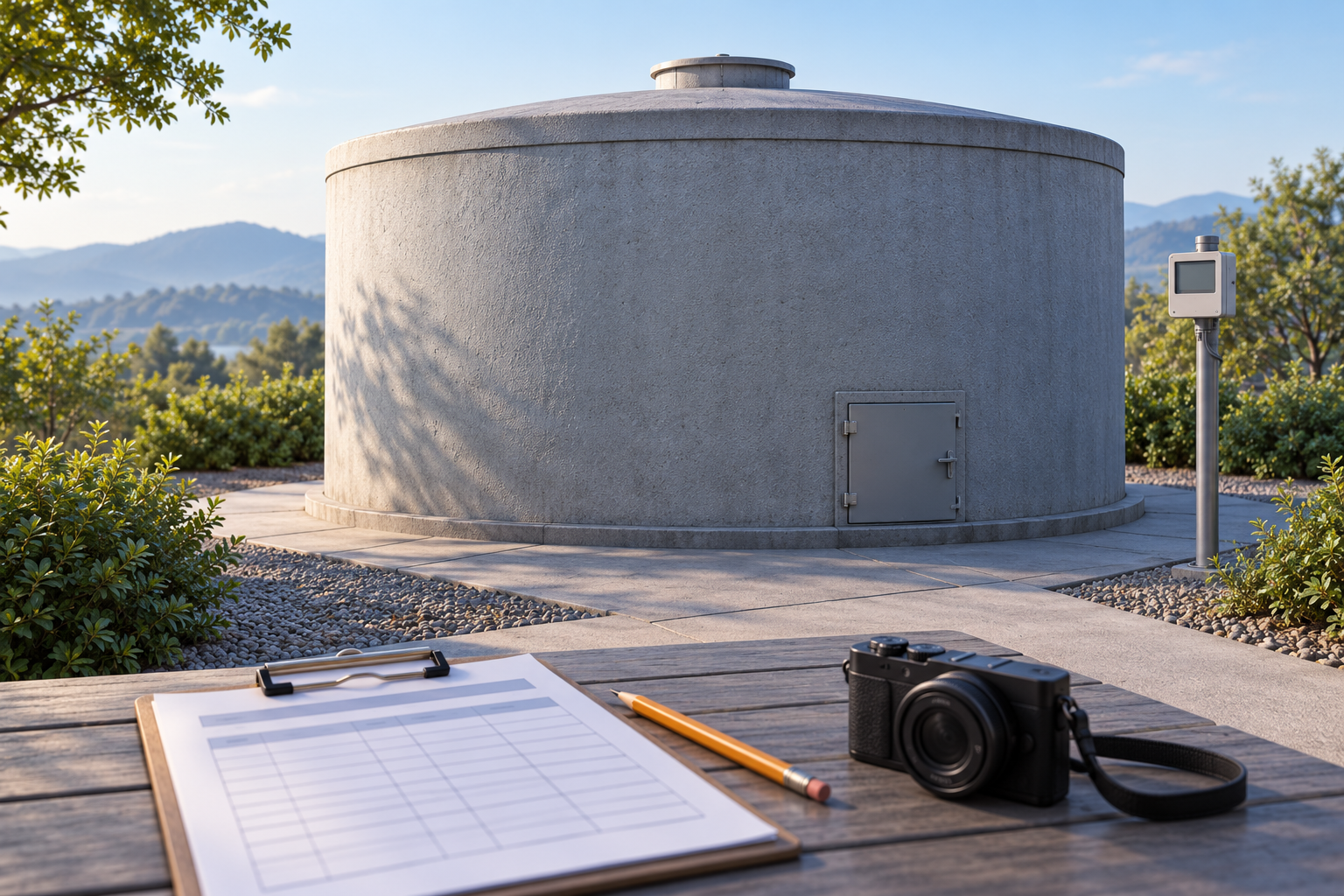
Photograph an accessible external display, including any warning symbol, and keep the original image. If an app or controller already stores history, retain that export or screenshots with their timestamps and units. Note power interruptions, recent instrument servicing and any known changes to the display configuration.
Measurement conditions deserve professional review. Sensor manufacturer Flowline’s level-measurement guidance explains that mounting and obstructions affect sensor performance, and that condensation can reduce the reliability of typical ultrasonic sensors. These are equipment-specific considerations, not evidence that a particular cistern’s reading is wrong.
Record the instrument model if it appears in accessible documentation. Ask the technician to review its suitability, configuration and measurement reliability. Keep the displayed units as recorded; do not convert a percentage or depth into “gallons leaked” without a verified basis. Avoid recalibrating or resetting equipment to make the readings look consistent.
Document outside evidence without disturbing it
From a safe, normally accessible position, photograph visible wet areas, discharge at an identified overflow, or changes around exposed pipe connections. Include a wider photograph that locates each close-up. Record recent rain, irrigation or washing that could matter when the investigator interprets the scene.
A damp patch is an observation, not proof that the liner failed. State whether overflow was actually seen and when. “No overflow observed at 10 a.m.” describes that visit; it cannot establish what happened overnight.
Do not open access covers, climb the tank, reach through an opening, excavate, disconnect plumbing or operate valves to gather more evidence. Do not enter the cistern. OSHA identifies tanks among spaces that can present confined-space hazards; an investigation requiring access belongs with properly qualified professionals.
Keep observations separate from conclusions
A useful entry might read: “Illustrative example: October 12, 9:10 a.m.; external controller shows 62%; display photograph 01. Delivery receipt from yesterday attached. Irrigation schedule available, actual run unconfirmed. Rain overnight. Damp ground beside the southeast fence, photograph 02. Water source and timing unknown.”
That entry gives the investigator something specific to compare with other records. Avoid replacing it with “tank leaking badly,” which omits the evidence and assigns a cause before it has been established. Preserve original files and add later corrections as dated notes.
Ask for findings before a lining scope
Send the log, photographs, available drawings, tank details and prior repair or lining records to the qualified water-system professional. Ask how they will distinguish a measurement problem, supply or operating issue, plumbing loss and a defect associated with the tank itself. The appropriate investigation depends on the installation.
Request a written account of confirmed findings, remaining uncertainties and the recommended next step. If lining work is proposed, ask what evidence supports that scope and what other work must accompany it. A good record helps the assessment begin with the actual history of the system and gives the owner a clearer basis for authorizing repairs.
Researched planning guidance. Cover: original AI-generated conceptual illustration, not a site inspection or diagnostic record.
Do this work for a living
Want to spray cistern liners?
ArmorThane equips and trains contractors to line cisterns, tanks and pipe with polyurea. Get the startup details in two minutes.