After a Cistern Overflow: Record the Event Before Changing the Lining Scope
After a cistern overflow, separate the operating cause, outlet and vent protection, and confirmed lining damage before agreeing the repair scope.
Water leaving a cistern through its overflow deserves a different investigation from water escaping through a cracked wall. Before adding relining to the repair scope, establish which opening discharged, why it discharged, and whether its protective components still work. The lining may need attention, but an overflow event is not, by itself, evidence of lining failure.
This guide helps owners organize a professional review after an observed overflow. It does not provide instructions for operating valves, testing controls, entering a tank or declaring drinking water safe. If discharge is continuing, notify the responsible operator or water-system professional promptly; do not wait to finish collecting records.
First establish what kind of overflow occurred
Ask the operator to identify the pipe and explain its intended role. A rain-fed collection tank receiving a storm inflow needs a different operational assessment from a tank filled by a controlled pump or delivery system. Record the actual water source and operating arrangement rather than applying a diagnosis from a different installation.
For finished drinking-water storage, EPA Region 8’s overflow guidance describes the overflow as protection against overfilling when incoming-water controls fail. It emphasizes visible discharge so an event can be noticed and reported. That public-water-system context matters: the document is not a universal diagnosis for every private rainwater cistern.
Preserve the event before anyone resets equipment
Give the professional a short timeline: when discharge was first noticed, whether it was still flowing at the last observation, and any coincident delivery, rainfall or alarm. Preserve existing controller messages or history if available through normal user access. Do not reset controls or provoke another overflow to recreate the event.
From a safe, ordinarily accessible position, take a wide photograph locating the outlet and a closer view if it can be obtained without approaching a hazard. Record the displayed water level and units. Label uncertainty honestly: “flow observed at 14:20” is more useful than an unsupported estimate of how many hours the tank overflowed.
Include the last known service work and the relevant drawings or equipment manuals. These records help the technician decide what to examine; they do not establish that a particular sensor, pump or valve caused the event.
Request a post-event outlet inspection
The EPA overflow sheet specifically calls for inspecting a screened outlet after an overflow event and replacing the screen if necessary. It also notes that flapper valves can stick open. Ask the service provider to identify the installed protective arrangement and document its condition after the discharge, rather than reporting only that the water stopped.
Have the professional review any displaced protection, obstruction, erosion or questionable discharge connection. EPA’s guidance prohibits direct overflow connections to sanitary sewers or storm drains and explains the protective purpose of an air gap. Applicable details belong with the qualified designer and local authority; this is not a pipe-routing or screen-selection specification.
Keep the vent in the investigation
An overflow and a vent have related but separate jobs. EPA’s current Region 8 vent guidance explains that changing water levels require air movement. During an overflow, the dedicated vent still has to provide that path. The document calls for professional engineering of airflow and distinguishes protective arrangements for different tank types.
Consequently, a repair proposal should preserve both sanitary protection and the required airflow. Do not cap an opening, pack it with improvised filter material or substitute finer mesh because it appears more protective. Ask the designer to confirm the complete arrangement, including access for future inspection. A stopped discharge should not become a reason to leave an unresolved vent defect outside the job.
Separate the findings from the lining decision
Request three distinct findings: the cause or remaining uncertainty behind the event, the condition of the overflow and vent protection, and any independently confirmed tank or lining damage. Give each proposed repair a responsible party and acceptance requirement. This makes it harder for a controls problem to disappear inside a general “recoat tank” quotation.
Our broader cistern-opening review covers routine checks across hatches and other penetrations. After a specific overflow, focus the follow-up on what changed and what evidence closes the incident. EPA’s separate component checklists can help the professional document that review.
Close the incident with clear responsibilities
Keep the event timeline, technician’s findings, completed repairs and unresolved questions together. Ask who determines any water-use restrictions, further inspection or testing, and what must happen before normal operation resumes. Stopped flow and a new screen do not, on their own, establish water quality.
Do not enter the cistern, open covers or climb the tank to complete this record. OSHA identifies tanks among confined spaces; necessary access belongs with qualified personnel using the applicable safety arrangements. The useful outcome is a documented explanation and an appropriate repair scope, with lining work included only where the assessment supports it.
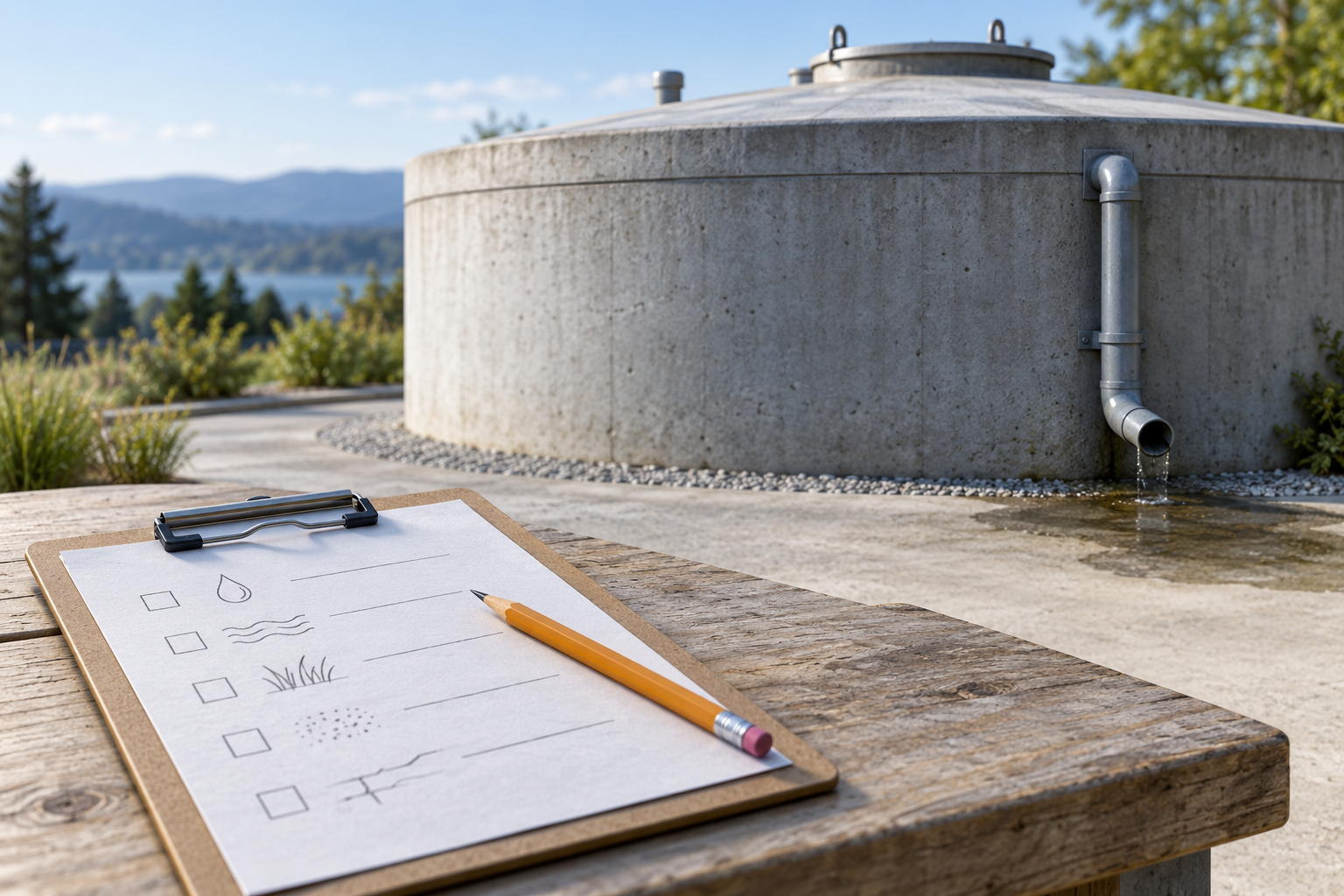
Researched planning guidance. Cover: original AI-generated conceptual illustration, not an approved installation detail or an inspection photograph.
Do this work for a living
Want to spray cistern liners?
ArmorThane equips and trains contractors to line cisterns, tanks and pipe with polyurea. Get the startup details in two minutes.