Water Testing After Cistern Relining: Plan the Laboratory Work Before the Outage
Coordinate the laboratory, sampling scope, collection points, delivery window and results review before a cistern relining outage begins.
A cistern relining schedule should include the laboratory before it includes a promised day for restoring drinking-water service. The owner needs to know who will collect samples, which questions the testing is meant to answer, and who will review the results. Sorting that out after refilling can leave the tank ready while the sampling arrangements are still unresolved.
This guide is a planning checklist for the owner, water-system operator and testing provider. It does not prescribe a disinfection treatment, a universal testing panel or a procedure for declaring water safe. Those decisions depend on the water source, system, work performed and applicable local requirements.
Explain the system and the work to the laboratory
Start with a short description: where the water comes from, what the cistern supplies, whether treatment is installed, and whether the system serves a private property or a regulated public supply. Include why the tank is being relined and any existing water-quality concern. A project prompted by leakage presents different questions from one that also involves an unexplained odor or a contamination incident.
For rainwater systems, the CDC recommends asking the health department which germs and chemicals to test for. Roofs, gutters, piping and storage materials can all affect collected water. That makes the complete system relevant to the conversation, even when the construction contract covers only the tank lining.
Give the operator or health authority the exact lining-system documents and the contractor’s proposed completion sequence. Ask whether other information is needed before a sampling plan can be agreed. Keep product suitability, installation acceptance and water-test results identifiable as separate parts of the project record.
Choose the laboratory around the required analyses
The EPA’s laboratory directory guidance points individuals toward state-certified drinking-water laboratories. Public water systems use certified laboratories for the applicable compliance analyses. Use the state program to identify a suitable provider, then confirm that the laboratory can perform the particular work your project requires.
Rather than ordering a package based only on its name, ask the provider to confirm:
- Which analyses are included and which questions they address
- Whether the laboratory’s certification covers the required analyses
- Whether a qualified sampler is available or must be arranged separately
- What information the laboratory needs about the source water and recent work
- Who will interpret the report and make the return-to-service decision
Request the proposed scope in writing. If a contractor, laboratory and authority each assume another party selected the tests, the gap may remain invisible until the report arrives.
Agree where and when samples will be taken
Ask the responsible professional to define sampling locations and timing relative to cleaning, disinfection, refilling and treatment operation. Record those decisions on a simple system sketch. Labels such as “tank outlet” or “kitchen tap” should point to a specific location that another sampler could identify later.
Do not improvise a convenient collection point or change treatment settings to obtain a preferred result. Ask how a delay in the lining work, a different refill source or an interruption in treatment would affect the agreed plan. A contingency is easier to arrange while the temporary water supply is still available.
If accessing a proposed location would require entering the cistern or reaching into an unsafe opening, ask for an appropriate sampling arrangement. This planning exercise does not authorize tank entry.
Book the bottles, courier and receiving window together
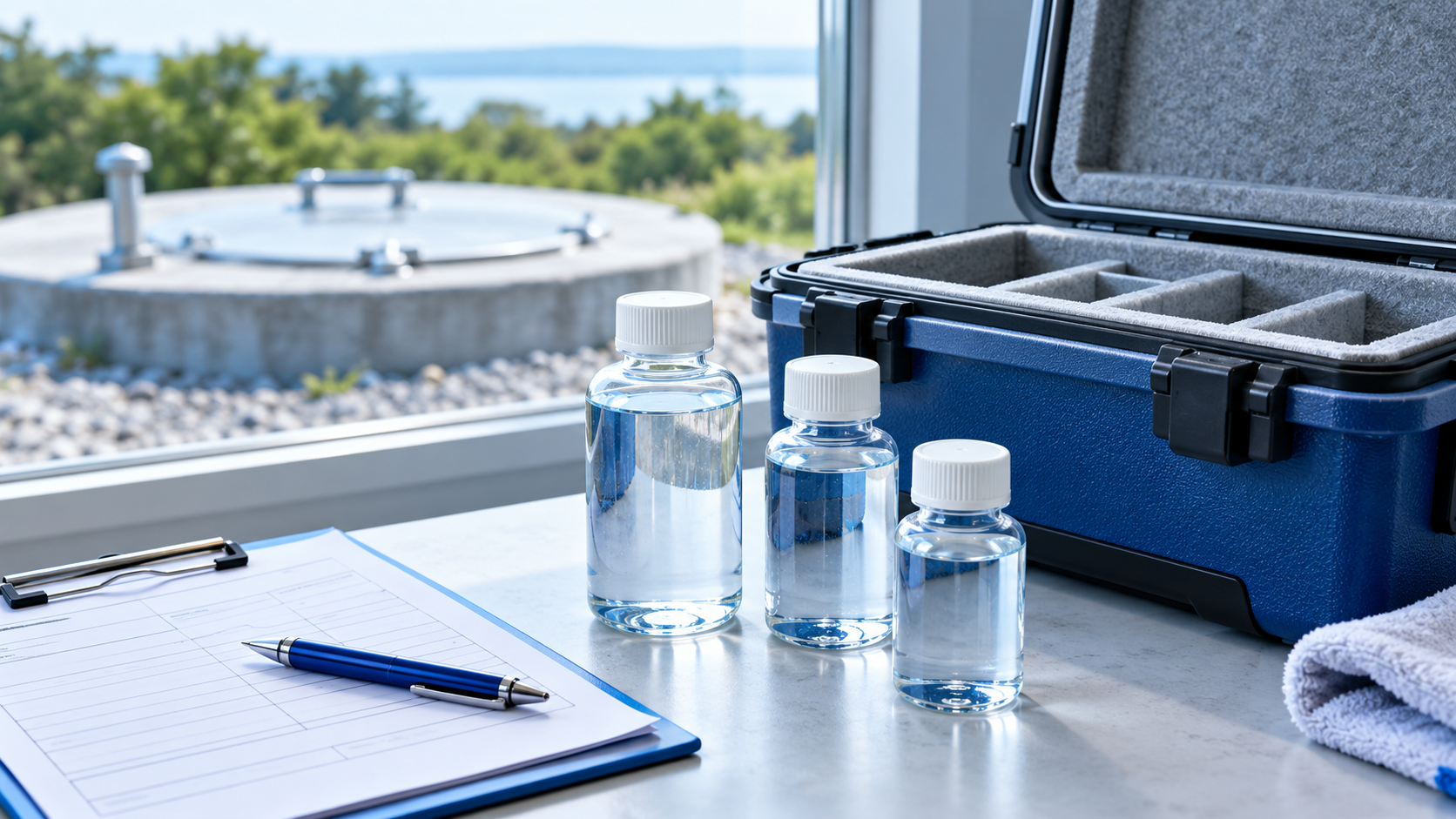
EPA’s Quick Guide to Drinking Water Sample Collection advises checking equipment, bottles, preservatives and collection procedures with the analyzing laboratory. It is a refresher for trained personnel, and its requirements vary with the analysis. Follow the laboratory’s current instructions rather than applying one bottle-handling method to every sample.
Before fixing a collection appointment, confirm the laboratory’s receiving hours, transport arrangements and required holding times. Ask how much time the laboratory needs after receipt. A delivery arriving before the office closes may still be unsuitable if the analytical time limit cannot be met.
Use the laboratory’s forms and confirm the information to record, including the sample location, collector, collection time and requested analysis. Identify who is responsible for delivery and who will be contacted if the laboratory cannot accept the sample. Avoid last-minute substitutions of containers or transport arrangements without the laboratory’s agreement.
Reserve time for review and unresolved results
Put the expected report date and the reviewer’s availability into the outage schedule. Ask in advance how a rejected sample, a flagged result or a request for additional testing will be handled. The plan should name the person who can extend the temporary-water arrangements and communicate any continuing use restrictions.
A report describes the submitted samples and the analyses performed. Have the responsible operator or authority explain what the results establish, what remains unresolved and whether the agreed release conditions have been met. Do not turn the absence of a tested contaminant into a general guarantee about every possible water-quality issue.
Keep one completed sampling file
At closeout, retain the approved sampling scope, location sketch, collection and delivery records, laboratory report, reviewer comments and documented service-release decision. File them beside the lining installation and cure records so future questions can be traced to the actual work.
The useful outcome is a clear sequence of responsibilities: the right provider, an agreed question, suitable samples and a documented review. Planning those steps early gives water testing a real place in the rehabilitation schedule.
Do this work for a living
Want to spray cistern liners?
ArmorThane equips and trains contractors to line cisterns, tanks and pipe with polyurea. Get the startup details in two minutes.