Beyond the Lining: Cistern Hatches, Vents and Overflow Checks
A practical outside-the-tank planning guide to hatch, vent and overflow questions, qualified inspection, and repairs that belong alongside cistern relining.

A new lining is only one part of a protected cistern. The tank also has a lid, openings, pipe connections, and a surrounding site. If unwanted water or debris can enter through those routes, a sound interior coating cannot close the gap.
For owners planning a relining project, an outside-the-tank review is a useful way to organize questions for the water-system professional. It is not a drinking-water clearance, a structural inspection, or permission to enter a tank. The aim is to identify components that need qualified attention and include them in the work scope before the lining becomes the only item on the quote.
Think of protection as a complete enclosure
The U.S. Environmental Protection Agency identifies damaged physical barriers as one route for contamination in finished-water storage. Its storage inspection and cleaning guidance discusses risks associated with gaps, cracks, open access hatches, and damaged vent or overflow protection. That document is written for public water systems; a household cistern still needs advice suited to its design, water source, and local requirements.
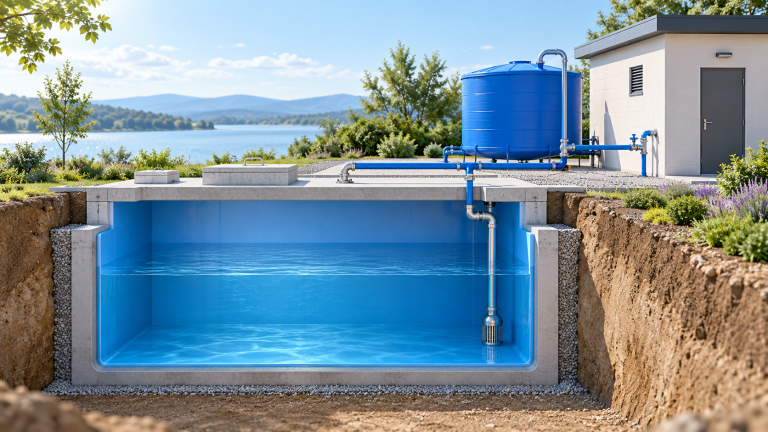
Start with a simple inventory. Identify the access hatch, vent, inlet, outlet, overflow, drain, and any other penetration. Mark anything you cannot confidently identify as a question. A sketch and labeled photographs can be more useful to the person assessing the tank than a description such as “the pipe at the back.”
Look at the hatch without turning it into an entry task
From a safe, accessible position, note whether the cover appears secure and whether there are visible gaps, damaged edges, or debris collecting around it. Record the surrounding ground or roof conditions as well. Water collecting near an opening deserves attention even when the tank interior looks new.
Do not remove a heavy lid, climb an unprotected tank, lean through an opening, or enter the cistern to complete this checklist. Arrange an appropriately qualified inspection when a component cannot be assessed safely. A phone photograph from the ground is preferable to creating a fall or entry hazard just to obtain a better picture.
EPA’s Region 8 inspection resources provide separate hatch, rooftop, vent, overflow, and drain checklists. They are useful prompts for organizing a professional review. Their existence also makes a practical point: these components merit individual attention rather than one broad “tank checked” note.
Ask what the vent and overflow are supposed to do
Different openings have different functions. Have the inspector identify each one and assess its protection, condition, location, and connection. If a screen or cover is damaged, photograph the defect and record the exact component rather than assuming any replacement from a hardware store will be suitable.
Do not plug a vent or alter an overflow as a quick fix. Have the responsible professional specify a repair that preserves the component’s intended function and meets the applicable requirements. Likewise, do not copy dimensions, screen sizes, or discharge arrangements from an unrelated tank. The right detail depends on the system and the governing design.
This is also a good time to clarify responsibility. Is the lining contractor handling the hatch repair, or is that a separate plumbing or tank-maintenance item? Who verifies completion? A known defect can survive a project simply because everyone assumed another trade owned it.
Distinguish routine maintenance from contamination response
A missing cover discovered during routine planning and a cistern exposed to floodwater are not the same situation. The CDC’s cistern emergency guidance explains that storms can introduce germs or chemicals. For untreated catchment water exposed to storm debris or floodwater, it advises avoiding use and asking the health department what to do before using the water again.
Do not assume that a fresh coating, a clear appearance, or ordinary household disinfection resolves every contamination problem. CDC specifically warns that water containing fuel or toxic chemicals cannot be made safe by treating it. Follow the appropriate health authority’s instructions and use a verified safe supply while the situation is assessed.
Build a repair list that survives the handover
For each observation, record the location, photograph, concern, assigned person, and next decision. Keep “observed” separate from “confirmed”: a stain can prompt investigation without proving a leak, and a photograph of a hatch does not certify sanitary condition.
Ask for the final scope to distinguish lining work, structural repairs, component repairs, cleaning, and return-to-service requirements. Review the completed items with the responsible professionals and retain their instructions. Good planning treats the cistern as a whole system. The interior lining matters, but so do the small openings and overlooked details that protect the water around it.
Do this work for a living
Want to spray cistern liners?
ArmorThane equips and trains contractors to line cisterns, tanks and pipe with polyurea. Get the startup details in two minutes.